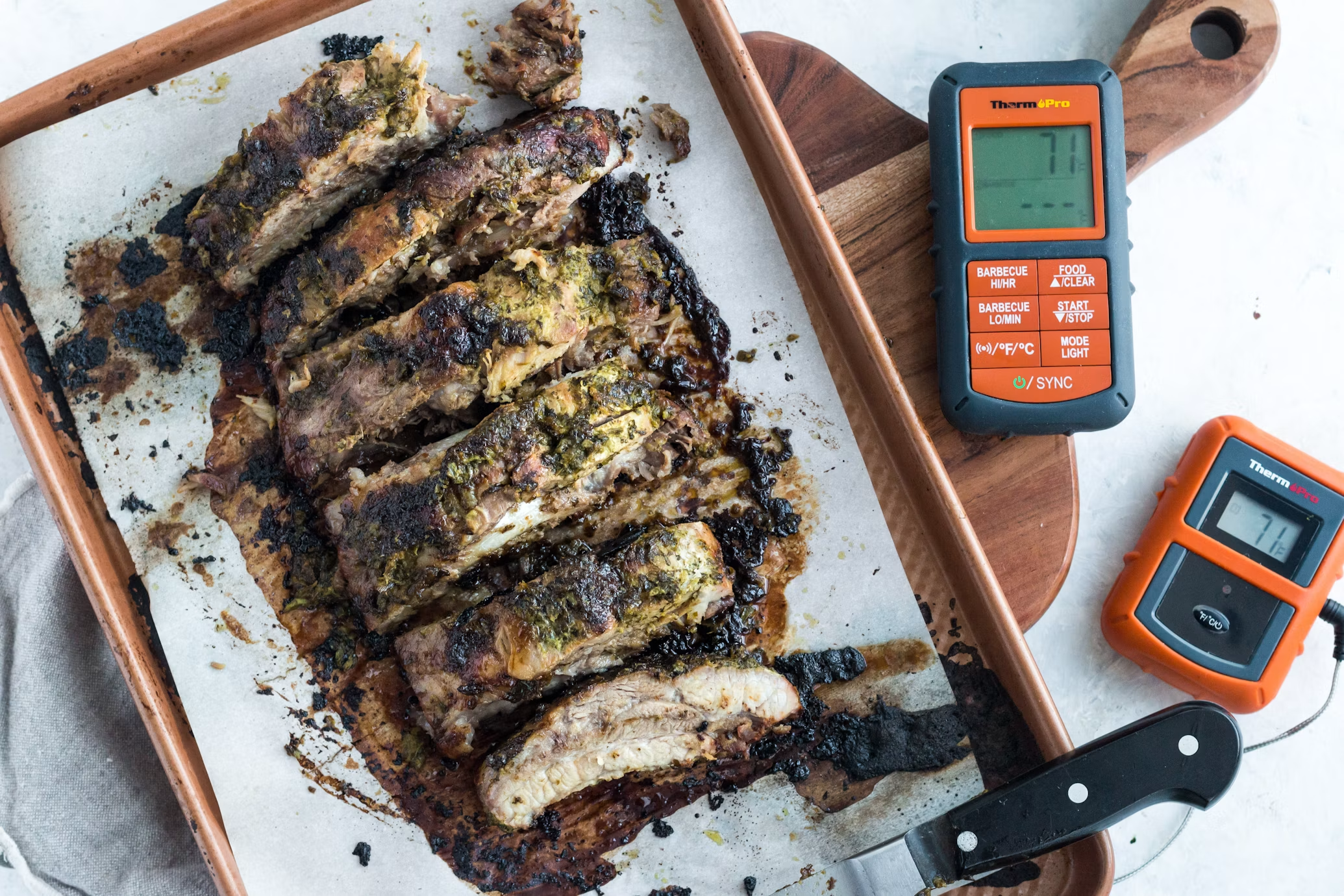
Guessing at doneness is how most people learn to cook meat, and it’s also how most people ruin a good cut. A finger poke tells you roughly where a steak stands if you’ve done it a thousand times. It tells you almost nothing on a ten-pound pork shoulder six hours into a smoke. That’s the gap wireless thermometers are supposed to close — a probe that reports back without you standing over the pit or cutting into the meat to check.
I’ve actually run two of the four thermometers below through real cooks — the Meater and the TempPro. The MeatStick and FireBoard I haven’t gotten my hands on yet, and I say so plainly in each section instead of pretending otherwise. Full details on how I evaluate gear like this are on how I test.
Quick note before the list: some of the links below are affiliate links. If you buy through one, Smoke Insider may earn a commission at no extra cost to you. That’s true whether I bought the unit myself or a manufacturer sent it — it doesn’t change what’s written here.
Table of Contents
Meater

At a Glance
Meater pairs a fully wireless probe with an app that predicts doneness and walks you through resting time. I’ve used the Pro model across a handful of cooks — grilling, one long smoke, a roast — which is where the take below comes from.
Core Features
Meater tracks internal and ambient temperature wirelessly and gives step-by-step guidance in the app for target doneness and rest times. It comes in several models — single-probe up through multi-probe kits — depending on how much you’re cooking at once.
Pros
- True wireless design: No cable running from the grill to a display, so you can actually walk away instead of standing next to it.
- App-guided cooking: The app estimates finish times and doneness so you’re not eyeballing it — at least when the connection holds.
- Model variety: Pro, Pro Duo, Pro XL, Plus, Block, and SE cover everything from a single steak to a full spread.
Cons
- Connectivity isn’t rock solid: The Bluetooth connection dropped or lagged more than once during cooks I ran it through — nothing that ruined the food, but enough that I noticed.
- Temp readings drifted: The displayed temp didn’t always match what I expected it to read, which matters more on a probe thermometer than almost anything else it does.
- Price: The higher-end kits cost more than a basic instant-read or a simple wired probe, and part of that premium is the app.
Who It’s For
Meater fits people who want to walk away from the grill without losing track of doneness — hosting, running multiple dishes, or just not wanting to hover. Just don’t treat the app as the only check on a cook.
The Real Take
I’ve used the Pro model on several cooks now. It works — mostly. The Bluetooth connection has dropped or lagged more than once, and on at least one cook the displayed temp didn’t match what I expected it to read. Neither issue ruined anything, but between the two, I don’t fully trust it as the only source of truth on a cook anymore. I still like having it. I just keep a separate instant-read around.
Pricing
Pricing varies by model and ranges from $79.95 to $349.95 USD depending on probe count and features. Choose a model that fits how often and how many pieces you cook.
TempPro

At a Glance
TempPro covers a broad lineup of temperature and humidity tools for cooks and weather hobbyists who want remote monitoring. I’ve used one of their meat thermometers through several cooks, and it’s the one on this list I’d actually recommend without a caveat.
Core Features
The lineup spans meat thermometers, infrared thermometers, hygrometers, and weather stations, most with Bluetooth or wireless connectivity and a companion app for tracking multiple probes at once.
Pros
- Accurate, consistently: Every reading I’ve checked has matched what I’d expect. No drift, no surprises.
- Connects without drama: Pairing and staying paired has been a non-issue in my experience, which isn’t something I can say about every wireless probe.
- Wide product range: Beyond meat thermometers, the ecosystem covers hygrometers and weather stations if you want to expand later.
- Value bundles: Multi-probe bundles bring the per-unit cost down if you need to track more than one cut.
Cons
- Limited durability info published: The company doesn’t say much publicly about long-term lifespan for heavy outdoor use — I haven’t had a unit fail, but I also haven’t run one for years yet.
- Higher-end models get pricey: The top of the range costs more than a casual griller probably needs.
- Availability varies: Not every model or bundle discount shows up in every region.
Who It’s For
TempPro fits home cooks and backyard grillers who want a probe that just works without babysitting the connection. If you also care about humidity or ambient weather tracking, the ecosystem covers that too.
The Real Take
No complaints, honestly. It’s read accurately every time I’ve used it and connected without drama. It’s less flashy than Meater’s guided-cook pitch, but flashy isn’t what matters at 2 a.m. when you’re checking a brisket. Of the two I’ve actually used, this is the one I trust more.
Pricing
Prices vary by device from around $39.99 up to over $200 depending on model and bundles. Discounts and multi-unit deals are offered periodically, which can bring the overall cost down for multi-probe or multi-device purchases.
The MeatStick

At a Glance
The MeatStick is built for outdoor cooks who want a flame-proof probe — rated for direct heat up to 1200°F — plus WiFi and Bluetooth range. I haven’t run this one through a cook myself yet, so treat the rest of this section as spec-sheet research, not firsthand use.
Core Features
It offers WiFi and Bluetooth connectivity, support for multiple sensors, and claimed battery life over 50 hours on some models, according to the manufacturer. The companion app provides presets and alerts.
Pros
- Rated for direct flame: The flame-proof housing is built for higher heat exposure than most probe thermometers claim to handle.
- Multi-probe support: Two or more sensors at once, on paper, for tracking a full smoke.
- Long claimed battery life: Manufacturer specs put some models over 50 hours between charges.
Cons
- Costs more upfront: Sits above basic thermometers in price.
- Needs the app: Full functionality depends on a smartphone, which won’t suit everyone.
- I haven’t verified any of this myself: Everything above is from the spec sheet and public reviews, not a cook I’ve actually run.
Who It’s For
On paper, this fits people who smoke low and slow often and want a probe rated for direct heat. Treat that as a starting point, not a recommendation, until I’ve actually run one through a smoke.
The Real Take
I haven’t tested the MeatStick myself, so I’m not going to invent a use case for it. Everything above is what the manufacturer and other reviewers say, not something I’ve verified on my own smoker. I’ll update this section — with an honest take — the first time I actually put one through a cook.
Pricing
Models range from $79.99 to $129.99 depending on configuration and bundle options, which reflect the added durability and multi-probe capability compared with entry-level thermometers.
FireBoard Labs
At a Glance
FireBoard Labs builds wireless monitoring systems and probes aimed at accuracy and remote control for smokers and grills. Like the MeatStick, I haven’t tested this one myself — what’s below comes from the spec sheet and public reviews.
Core Features
The lineup includes Bluetooth and WiFi connectivity, multi-probe support, and what the company calls S1G wireless sensor technology for extended range, plus controller systems for grills, smokers, and ovens.
Pros
- Multi-device ecosystem: Probes, controllers, and accessories that reportedly scale from one grill to several.
- Assembled in Kansas City: The company manufactures locally, for whatever that’s worth to you.
- Generally positive reviews: Other users report good support when troubleshooting setup issues.
Cons
- Some reported part or documentation issues: A number of buyers mention receiving incorrect parts or unclear setup instructions.
- Pellet control reportedly inconsistent: Some real-world reports describe the automated pellet system as not fully mature.
- I haven’t verified any of this myself: Same caveat as the MeatStick — spec sheet and other people’s reviews, not my own cook.
Who It’s For
On paper, this fits anyone managing multiple grills or smokers who wants centralized remote monitoring. Same caveat as above — treat this as a starting point until I’ve run one myself.
The Real Take
Same situation as the MeatStick: I haven’t put a FireBoard unit through an actual cook, so there’s no honest firsthand take to give you yet. What’s above is secondhand. I’d rather tell you that plainly than dress up a spec sheet as a review.
Pricing
Pricing varies by model and kit, with accessories starting near $19 and complete bundles or advanced systems up to $359. Expect to pay more for multi-probe kits and controller bundles that include S1G sensors and app features.
How They Compare
Quick reference. “Tested” means I’ve actually run it through cooks — not that it’s necessarily the best pick, just the one I can vouch for firsthand.
| Product Name | Key Features | Pros | Cons | Pricing |
|---|---|---|---|---|
| Meater | Wireless temperature probes, app-guided cooking | True wireless design, app guidance, model variety | Bluetooth drops sometimes, temp can drift, price | $79.95 to $349.95 |
| TempPro | Wireless meat and weather monitoring, app integration | Accurate, connects reliably, wide product range | Limited public durability info | $39.99 to over $200 |
| The MeatStick | WiFi/Bluetooth probes, flame-proof design | Rated for direct heat, multi-probe, long claimed battery | Not yet tested by me, costs more, needs app | $79.99 to $129.99 |
| FireBoard Labs | Wireless monitoring, multi-probe, local manufacturing | Modular ecosystem, generally positive reviews | Not yet tested by me, some reported part issues | Accessories from $19; systems up to $359 |
The Bottom Line
If you want a wireless thermometer today, the TempPro is the one I’d actually point you to — it’s done what it’s supposed to do every time I’ve used it. The Meater isn’t bad, but I’d go in knowing the connection and the temp reading both need a second check now and then. The MeatStick and FireBoard might be exactly what you need — the specs suggest as much — but I’m not going to vouch for something I haven’t cooked on myself. I’m working toward actually testing both, and this post gets updated the day that happens.
For the full rundown of how I decide what’s worth trusting, there’s how I test. For everything else that’s actually earned a spot on this site, start with Gear.
Frequently Asked Questions
What features should I look for in a wireless meat thermometer?
Accuracy first — a probe that’s off by more than a couple degrees isn’t worth the price. After that: real wireless range, not just ten feet, a companion app that doesn’t need a manual to understand, and battery life that survives a full smoke, not just a quick grill session.
How do I connect a wireless meat thermometer to my phone?
Download the manufacturer’s app, turn on Bluetooth or WiFi, and follow the in-app pairing steps — usually a button press on the probe and a tap to confirm. Most modern units pair in under a minute. If it’s fighting you longer than that, restart the app before you restart the probe.
Can I use one for grilling, smoking, and roasting?
Yes — the probes themselves don’t care what’s cooking them, just what temperature they’re reading. The difference between cooking methods is mostly about probe placement and how long the unit needs to hold a connection, not the thermometer’s capability.
How long does the battery actually last?
It varies more than the marketing suggests — anywhere from about 20 hours to several days depending on the model and how often the display or Bluetooth radio is active. If you’re running an all-day smoke, check the actual spec before you rely on it, not just the headline number.
Are these things easy to clean?
Mostly, yes — probes are usually rated for a rinse or wipe-down, and some are fully submersible. Check the specific model, though; flame-proof or high-heat-rated units sometimes have different cleaning rules than a standard probe.
What should I expect to spend?
Somewhere between $40 for a basic single probe and $350 for a multi-probe kit with all the app features. The jump in price mostly buys more probes and a more polished app, not necessarily better core accuracy.
Free Cheat Sheet
Smoking Times & Temps Cheat Sheet
Pit temps, pull temps, and total time for the cuts you smoke most — one page, worth printing.